(Managing Resistance To Change Cont. 1)
Symptoms of resistance
"...- emotion (fear, loss, sadness, anger, anxiety, frustration, depression, focus on self)
- disengagement (silence, ignoring communications, indifference, apathy, low morale)
- work impact (reduced productivity/efficiency, non-compliance, absenteeism, mistakes)
- acting out (conflict, arguments, sabotage, overbearing, aggressive or passive-aggressive behaviour)
- negativity (rumours/gossip, miscommunications, complaining, focus on problems, celebrating failure)
- avoidance (ignoring a change, reverting to old habits, workaround, abdicating responsibilities)
- building barriers (excuses, counter approaches, recruiting dissenters, secrecy, breakdown in trust)
- controlling (asking lots of questions, influencing outcomes, defending current state, using status)..."
Prosci, 2023p
Unless resistance is handle correctly, you pay a price in terms of reduced outcomes and benefits plus increased costs. Some costs of resistance include:
"...- delayed project or initiative
- project abandonment
- reduced productivity
- greater absenteeism
- loss of valued employees
- added financial cost and failure risk of the initiative
- inefficient processes
- unachievable goals and poor outcomes
- the fear of change failures..."
Prosci, 2023p
Need to look beyond the symptoms to the root causes of resistance outlined below:
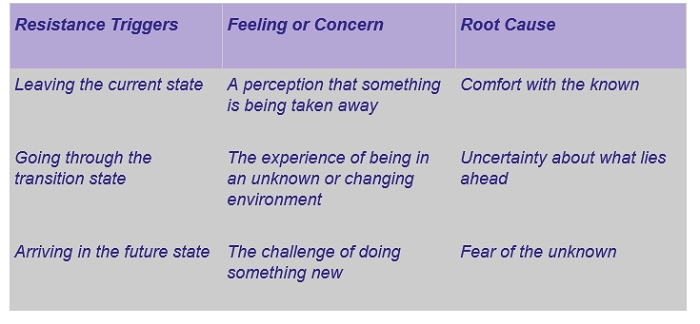
(source: Prosci, 2023p)
Handling resistance is critical for the success of organisational change initiatives.
(for more detail, see elsewhere in the knowledge base)