Storytelling in Change
Introduction
Storytelling is a way of establishing emotional connection.
Many decisions are influenced by emotions first and then we rationalise logically later (see diagram below)
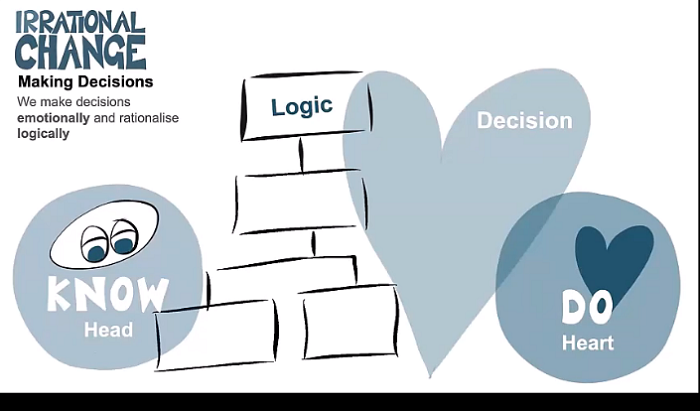
(source: Edwina Pike, 2023)
Storytelling is a way of communicating. You understand the world through the words you use.
Furthermore, there is a gap between what you know and then implementing it.
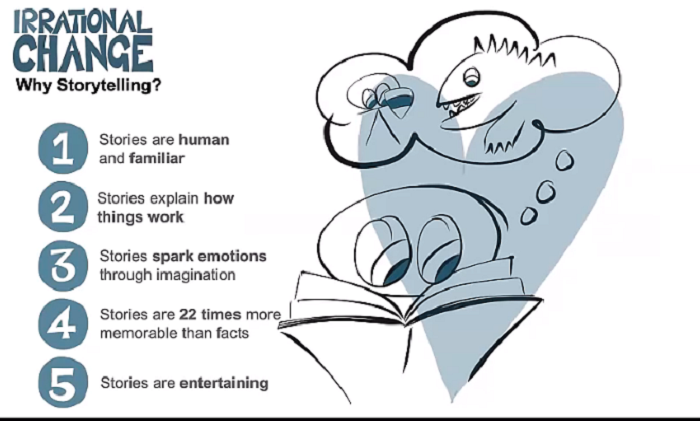
Stories have always provided the basis for the way we live, ie how humans connect together, how you learn, understand social norms, develop relationships with others, understand each other, etc.
Stories generate emotions and are therefore very powerful influencers.
NB You are natural storytellers and in data there are thousands of stories, ie
"...data are just summaries of thousands of stories - tell a few of those stories to make the data meaningful..."
Dan Heath as quoted by Theresa Moulton, 2023a
(source: Edwina Pike, 2023)
Analogies and Metaphors
Storytelling can involve the use of analogies and metaphors. An analogy is demonstrating a limited similarity between things that are otherwise dissimilar, eg viral infections and the spread of ideas, ie something goes viral. In contrast, metaphors imply an implicit comparison, ie words that ordinarily designate one thing are used to designate another, eg my life is a sea of troubles
NB Need to keep things simple and short as research has shown the more complicated a description of something, the more others feel you have something to hide!!! The simpler and shorter you can explain something, the more people will believe you. A simple test is to ask if it will work for a 5-year-old, ie would they understand it?!!!
An example of an analogy
Comparing your change process to having a visitor in your house. The visitor can be treated in various ways
- as an outsider (no sign of acceptance, ie not allowed in the house)
- with minimal interaction (transactional, ie just offered bed and board)
- as a valued guest (politely welcomed, shown respect, only expected to stay short-term and temporarily)
- as a family member (fully embraced and adopted)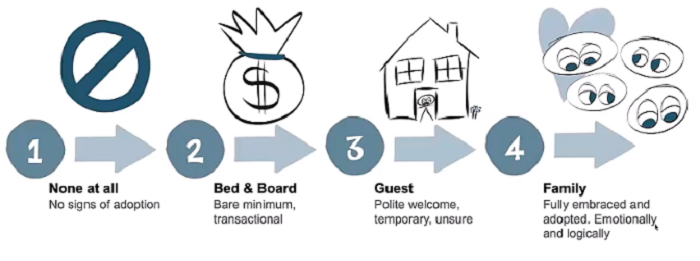
(source: Edwina Pike, 2023)
How is your change process treated, ie like an outsider or bare minimal or valued guest or family member?
Fear of storytelling
Many storytellers are concerned about others' reaction to their stories, eg not interested, bored, upset, etc.
Important elements of good storytelling
- be authentic, ie believe it to be true
- keep it simple
- keep it short and brief
- keep it real
NB The story needs to be able to resonate with your audience.
We have been psychologically trained to listen to stories, ie if somebody is about to tell a story, convention dictates that listeners become quiet and attentive.
Story Sequence
i) starting a story
The opening few words can be pivotal in how people react to a story. Some examples that are attention grabbers:
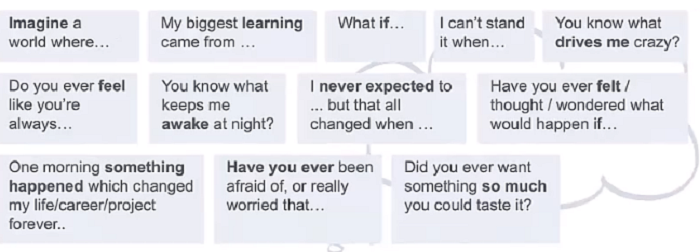
(source: Edwina Pike, 2023)
ii) start with something familiar (helps people connect to the story and their common past emotions, etc)
iii) set the scene, give context (engage your senses so that you stimulate your memory, ie start to scene built, etc )
iv) describe the new thing (this includes engaging the listeners senses, ie what can I hear, see, feel, smell, say, etc.
NB You see the world through your senses)
v) make it tangible (make it practical; includes describing what is going to change and not changing)
vi) social proof (use examples of where it worked well elsewhere within the organisation and/or outside the organisation; focus on the measurable outcomes such as collaboration, etc, that not outputs such as end product)
Story sequence is summarised below:
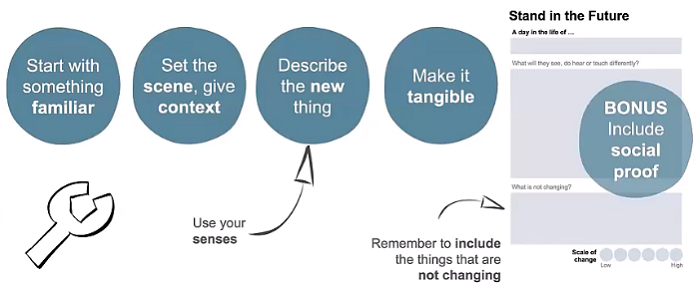
(source: Edwina Pike, 2023)
Translate, not cascade, communications.
Developing a leader's story
The below diagram, especially the 5 questions, can help a leader develop acceptable story about the change.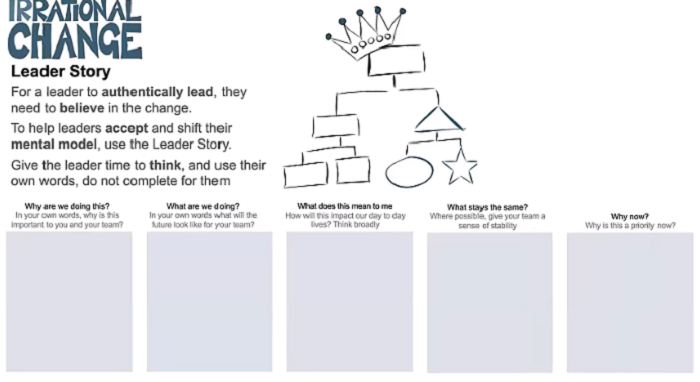
(source: Edwina Pike, 2023)
NB The story needs to be in the leader's own words, not developed by anybody else; this helps the leader get ownership.