Media and Sports Industries (summary)
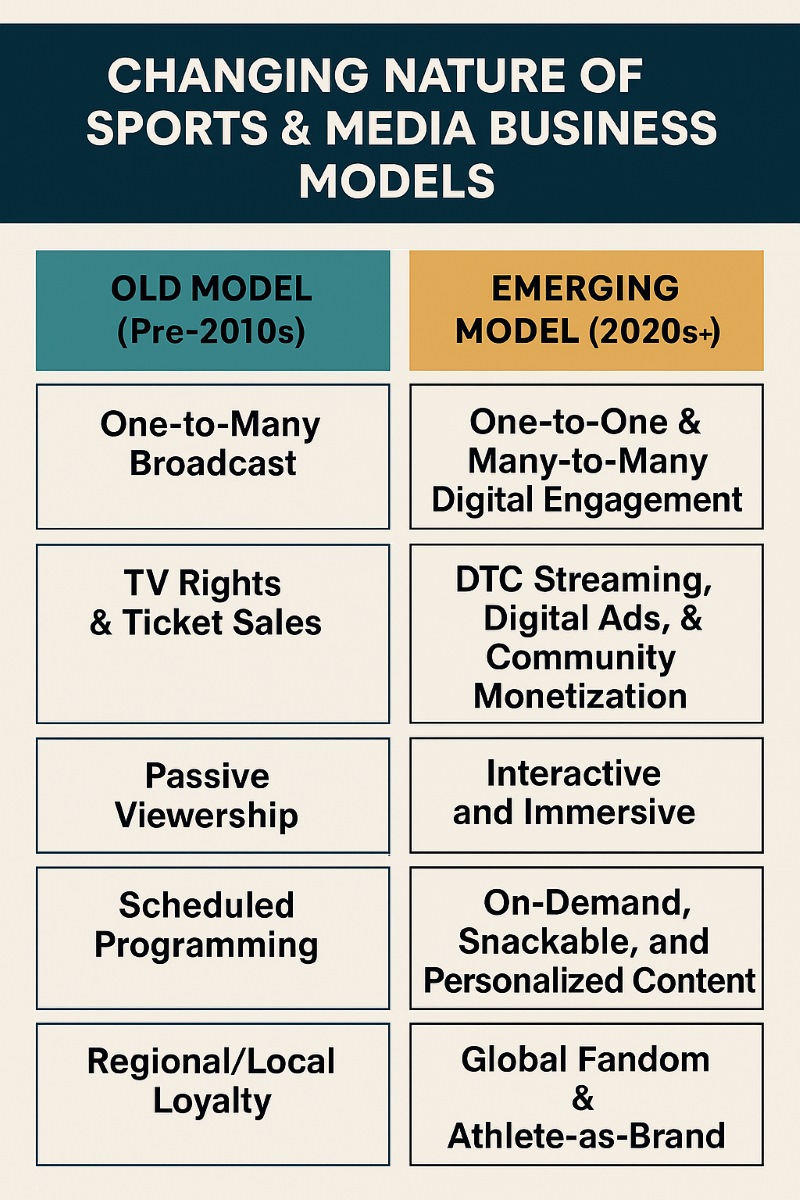
What does it mean for their business models?
|
OLD MODEL (Pre-2010s) |
EMERGING MODEL (2020s+) |
|
One-to-many broadcast |
One-to-one & many-to-many digital engagement |
|
TV rights & ticket sales |
DTC streaming, digital ads and community monetisation |
|
Passive viewership |
Interactive and immersive fan participation |
|
Scheduled programming |
On-demand, snackable eand personalized content |
|
Regional/local loyalty |
Global fandom and athlete-as-brand |
“…Mass media has changed the business of sport and sport has shaped the media…… media……live off sport. America's largest media companies spend more than a fifth of the content budgets on sports rights. In 2024, the most watched broadcasts in America were National Football League (NFL) matches…”
The Economist, 2024
Mass media is evolving in a way that continually reshapes the sports industry and vice versa.
For example,
“…A third of Paris Games viewers will watch not via broadcast but through online streaming…”
The Economist, 2024
An important part of the shift is Generation Z who are reshaping the sports/media industries through digital engagement, cultural shifts and new fan expectations. Some examples:
- Digital-First Engagement
Gen Z fans prioritize digital platforms over traditional media. They consume sports content through short-form videos, memes and interactive social media, favouring platforms like TikTok and Instagram. This shift has prompted sports leagues to adapt their content strategies to meet younger audiences where they are most active.
- Community and Identity
Younger fans seek more than just game statistics; they value storytelling, behind-the-scenes access and authentic connections with athletes. This mirrors the fandom culture seen in music genres like K-pop, where personal narratives and emotional investment play significant roles.
- Influencer Culture and Merchandise
Athletes are now seen as influencers, with their personal brands extending beyond the sport. Fans engage with athletes' lifestyles, fashion and social causes, leading to a surge in personalized merchandise and collaborations that resonate with Gen Z values.
Implications for the Sports Industry
Traditional sports organizations are re-evaluating their approaches to fan engagement. There's a growing emphasis on creating immersive experiences, leveraging digital platforms for storytelling and fostering communities that align with the values and interests of younger audiences.
This transformation signifies a broader cultural shift in how sports are consumed and experienced, highlighting the importance for the industry to evolve alongside its audience.